Introduction
Many clinics rely heavily on social media to attract patients, believing that an active Facebook or Instagram page is enough to grow their business.
While social media plays an important role, it shouldn’t be your clinic’s digital foundation.
Your website is the only online platform that you fully own and control. It’s where potential patients learn about your services, evaluate your credibility, and decide whether to book an appointment.
In today’s healthcare landscape, a professional website is no longer a luxury—it’s an essential business asset that supports patient acquisition, builds trust, and drives long-term growth.
In this article, we’ll explore why every clinic should invest in a professional website and how it contributes to business success.
Your Website Is Your Clinic’s Digital Headquarters
Think of your website as your clinic’s online reception.
While social media platforms help patients discover your clinic, your website is where they come to learn more before making a decision.
A professional website gives patients everything they need in one place, including:
- Information about your clinic
- Medical services
- Doctor profiles
- Contact details
- Appointment booking options
- Patient reviews
- Educational resources
A well-designed website creates a strong first impression and builds confidence from the very beginning.
1. Build Patient Trust
Healthcare decisions are built on trust.
Before booking an appointment, patients want reassurance that they’re choosing a reliable healthcare provider.
A professional website increases credibility by showcasing:
- Your medical team
- Clinic certifications
- Patient testimonials
- Treatment information
- Professional branding
A clinic with a modern, informative website is often perceived as more trustworthy than one with little or no online presence.
2. Help Patients Find You on Google
Unlike social media posts, which have a limited lifespan, your website can continuously attract patients through Search Engine Optimization (SEO).
When patients search for terms like:
- Dentist near me
- Dental implants
- Dermatology clinic
- Orthopedic specialist
an SEO-optimized website gives your clinic the opportunity to appear in search results exactly when patients need your services.
This creates a consistent source of organic traffic without relying solely on paid advertising.
3. Make Booking Appointments Easier
Patients expect convenience.
A professional website allows them to:
- Learn about your services
- Contact your clinic
- Request appointments
- Find directions
- Access important information
without needing to send multiple messages or wait for responses.
A simple booking process improves the overall patient experience and increases conversion rates.
4. Support Your Marketing Campaigns
Whether you’re running Meta Ads, Google Ads, or social media campaigns, your website should be the destination for potential patients.
Instead of directing users to a social media page, a dedicated landing page or service page provides:
- Clear information
- Strong calls to action
- Better user experience
- Higher conversion potential
A professional website helps maximize the return on every marketing campaign.
5. Showcase Your Expertise
Your website gives you the opportunity to educate patients through high-quality content.
Publishing blog articles, treatment guides, and healthcare resources helps:
- Answer patient questions
- Demonstrate medical expertise
- Build credibility
- Improve SEO performance
Educational content positions your clinic as a trusted authority in your specialty.
6. Strengthen Your Brand
Your website is one of the most important expressions of your brand.
It should reflect your clinic’s:
- Visual identity
- Values
- Professionalism
- Patient-centered approach
A consistent brand experience across your website, social media, and marketing materials helps patients recognize and remember your clinic.
7. Track Patient Behavior
One of the biggest advantages of having a website is access to valuable data.
With tools like Google Analytics, you can measure:
- Website traffic
- Visitor behavior
- Most viewed services
- Appointment requests
- Conversion rates
- Traffic sources
These insights help you make smarter marketing and business decisions.
Common Website Mistakes Clinics Should Avoid
Many clinic websites fail to generate results because they:
- Look outdated.
- Load slowly.
- Aren’t mobile-friendly.
- Lack clear calls to action.
- Provide incomplete service information.
- Don’t include online booking options.
- Ignore SEO best practices.
Your website should be designed with both patients and search engines in mind.
What Should Every Clinic Website Include?
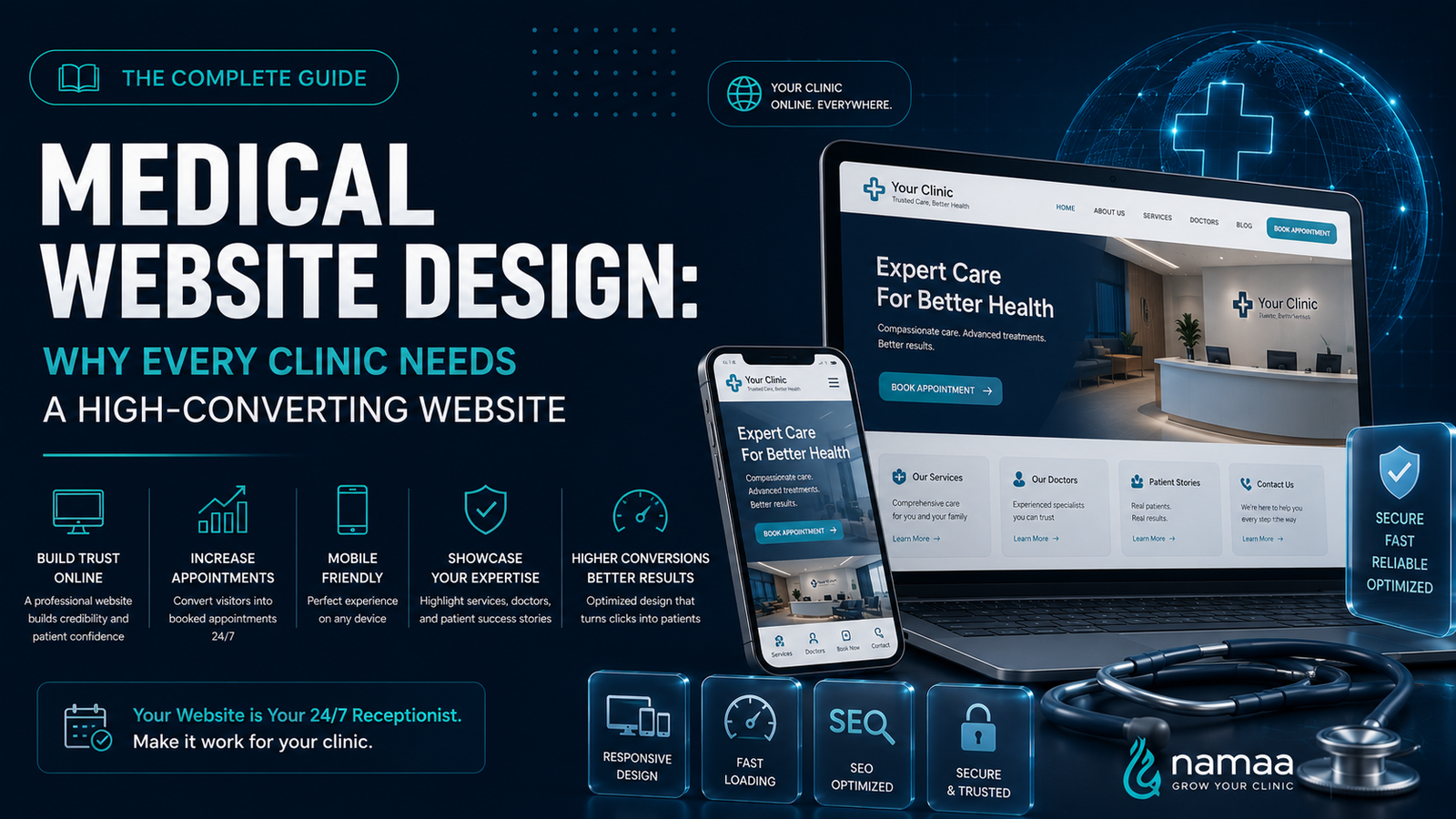
A professional clinic website should feature:
- A modern, responsive design.
- Clear service pages.
- Doctor profiles.
- Online appointment booking.
- Contact information and location.
- Patient testimonials.
- Educational blog content.
- SEO optimization.
- Fast loading speed.
- Strong security and data protection.
These elements create a better experience for both patients and search engines.
How Namaa Helps Clinics Build High-Performing Websites
At Namaa, we don’t build websites just to look good—we build websites that support business growth.
Our websites are designed to strengthen your brand, improve patient trust, support SEO, increase conversions, and integrate seamlessly with your overall marketing strategy.
Every website we create is built with one objective in mind: helping your clinic attract more qualified patients and convert more visitors into booked appointments.
Conclusion
A professional website is much more than an online brochure—it’s one of the most valuable assets your clinic can own.
It builds trust, improves visibility, supports your marketing efforts, enhances the patient experience, and creates opportunities for sustainable growth.
While social media helps patients discover your clinic, your website is where they decide whether to choose you.
For clinics looking to grow in today’s digital healthcare market, investing in a professional website is no longer optional—it’s a strategic necessity.