Introduction
When patients need a doctor, dentist, or specialist, their first instinct is usually to search on Google.
Whether they’re looking for a dermatologist in Riyadh, a dental clinic in Jeddah, or an IVF center in Dammam, the clinics that appear at the top of Google’s search results are far more likely to receive inquiries and appointment bookings.
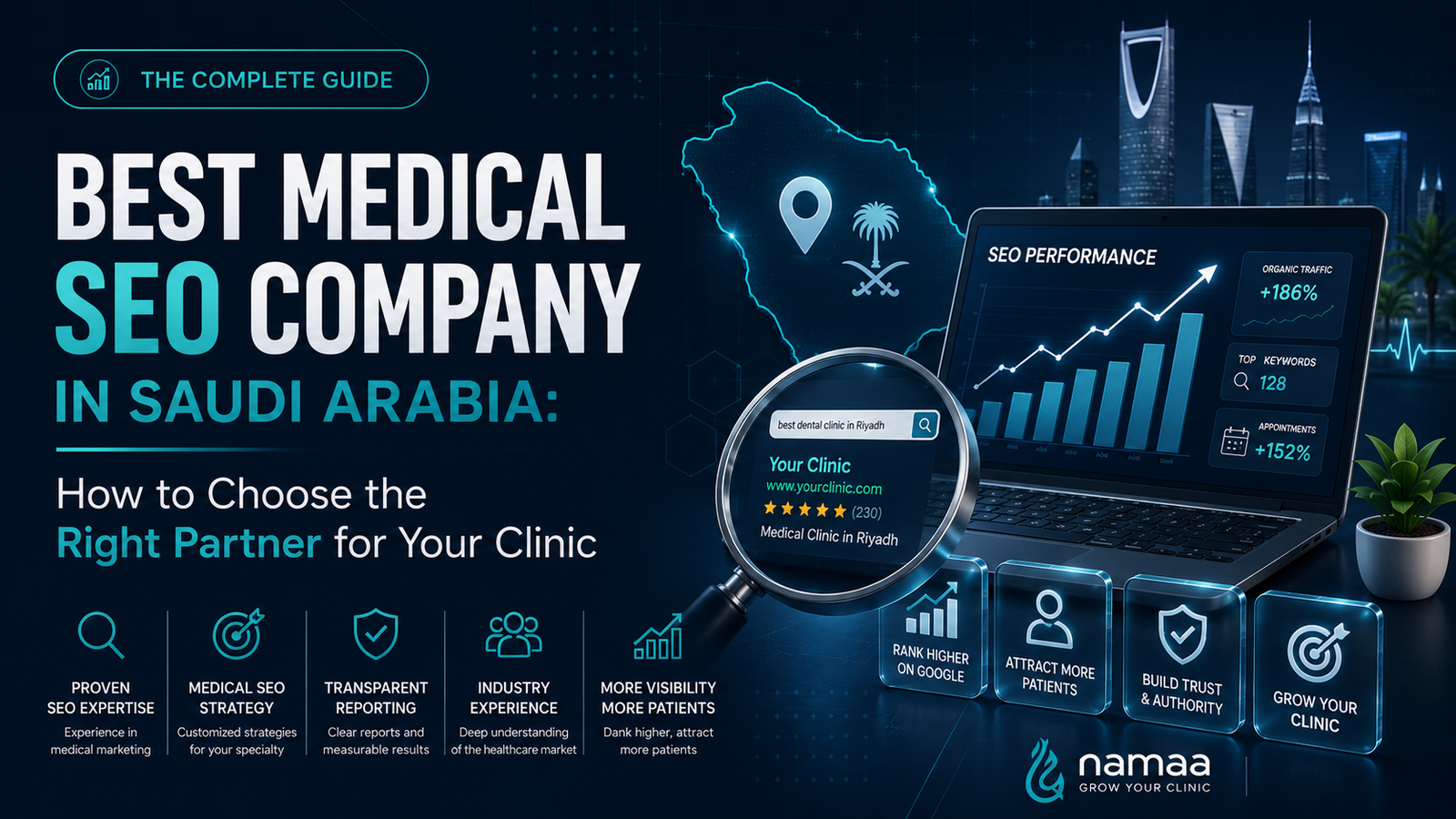
This is why Medical SEO (Search Engine Optimization) has become one of the most valuable long-term investments for healthcare providers.
Unlike paid advertising, SEO helps your clinic attract qualified patients organically, improve online visibility, and build trust over time.
In this guide, you’ll learn how Medical SEO works, why it matters, and the proven strategies that can help your clinic rank higher on Google and generate more patient appointments.
What Is Medical SEO?
Medical SEO is the process of optimizing your clinic’s website so it ranks higher in Google’s organic search results for healthcare-related searches.
Instead of paying for every click through advertising, SEO helps patients discover your clinic naturally when they search for medical services.
For example, patients may search for:
- Dentist in Riyadh
- Orthopedic doctor near me
- Best dermatology clinic in Saudi Arabia
- IVF specialist in Jeddah
- Dental implants Riyadh
When your website appears among the top search results, you gain visibility at the exact moment patients are actively looking for care.
Why SEO Is Essential for Medical Clinics
Healthcare is one of the most competitive industries online.
Every day, thousands of patients search Google for doctors, clinics, treatments, and medical advice.
If your clinic doesn’t appear in those searches, your competitors will receive those patients instead.
Medical SEO helps your clinic:
- Increase online visibility.
- Attract qualified patients.
- Build long-term credibility.
- Reduce dependence on paid advertising.
- Generate consistent appointment requests.
Unlike social media posts that disappear within days, SEO continues delivering value for months and even years.
How Google Chooses Which Clinics to Rank
Google’s goal is to provide users with the most relevant and trustworthy results.
To determine rankings, Google evaluates several factors, including:
- Website quality
- Content relevance
- User experience
- Website speed
- Mobile usability
- Authority and credibility
- Local relevance
Clinics that consistently provide valuable information and an excellent user experience are more likely to rank higher.
1. Start with the Right Keyword Research
Every successful SEO strategy begins with understanding what your potential patients are searching for.
Instead of targeting broad keywords, focus on search terms with clear patient intent.
Examples include:
- Dental clinic in Riyadh
- Cosmetic dentist Saudi Arabia
- IVF clinic Jeddah
- Dermatologist in Khobar
- Teeth whitening Riyadh
Long-tail keywords often have lower competition and attract patients who are closer to booking an appointment.
2. Optimize Every Service Page
Many clinic websites list all services on a single page.
Instead, create dedicated pages for each treatment or specialty.
For example:
- Dental Implants
- Invisalign
- Teeth Whitening
- Root Canal Treatment
- Orthodontics
- Cosmetic Dentistry
Each page should explain:
- The treatment
- Benefits
- Who it’s for
- The treatment process
- Recovery expectations
- Frequently asked patient concerns
This helps Google understand your services while providing valuable information for patients.
3. Create Educational Blog Content
Google rewards websites that consistently publish useful content.
Educational articles help answer patient questions before they contact your clinic.
Examples include:
- How long do dental implants last?
- Signs you need orthodontic treatment.
- What causes gum disease?
- Is teeth whitening safe?
- How to prepare for a dental implant procedure.
Every article becomes another opportunity for your clinic to appear in Google search results.
Over time, this builds authority and increases organic traffic.
4. Focus on Local SEO
Most patients want a clinic near their location.
Local SEO helps your clinic appear in searches such as:
- Dentist near me
- Best dental clinic in Riyadh
- Orthodontist Jeddah
To improve local rankings:
- Optimize your Google Business Profile.
- Keep your clinic’s Name, Address, and Phone Number (NAP) consistent across all platforms.
- Encourage satisfied patients to leave Google reviews.
- Add location-specific keywords throughout your website.
- Embed Google Maps on your contact page.
Local SEO is one of the fastest ways to increase visibility within your target city.
5. Improve Website Speed
Patients expect websites to load almost instantly.
A slow website leads to:
- Higher bounce rates
- Lower patient engagement
- Poor user experience
- Lower Google rankings
Improve performance by:
- Compressing images
- Using fast hosting
- Reducing unnecessary scripts
- Optimizing page loading speed
A faster website benefits both SEO and patient satisfaction.
6. Make Your Website Mobile-Friendly
Most healthcare searches now happen on smartphones.
Google uses mobile-first indexing, meaning it primarily evaluates the mobile version of your website.
A mobile-friendly website should have:
- Responsive design
- Easy navigation
- Readable fonts
- Fast loading speed
- Simple appointment booking
If patients struggle to use your website on mobile, they’re likely to leave and choose another clinic.
7. Build Trust Through High-Quality Content
Healthcare websites must demonstrate expertise and credibility.
Include content that highlights your clinic’s professionalism, such as:
- Doctor profiles
- Medical qualifications
- Certifications
- Patient testimonials
- Before-and-after cases (where appropriate)
- Educational resources
Trust is a major ranking factor in healthcare-related searches because patients rely on accurate medical information before making decisions.
8. Optimize Your Technical SEO
Technical SEO ensures search engines can properly crawl and understand your website.
Key technical improvements include:
- Secure HTTPS connection
- Clean website structure
- XML sitemap
- Optimized page titles
- Meta descriptions
- Internal linking
- Structured data (Schema Markup)
A technically optimized website provides a stronger foundation for higher rankings.
9. Build Internal Links
Internal linking connects related pages throughout your website.
For example:
A blog about dental implants can link to:
- Dental Implant Service Page
- Implant Cost Guide
- Implant Recovery Article
- Appointment Booking Page
Internal links help both users and search engines navigate your website while strengthening SEO performance.
10. Monitor Your SEO Performance
SEO requires continuous improvement.
Track important metrics such as:
- Organic traffic
- Keyword rankings
- Google impressions
- Click-through rate (CTR)
- Appointment requests
- Conversion rate
- Bounce rate
Using tools like Google Search Console and Google Analytics helps identify opportunities for optimization.
Common Medical SEO Mistakes
Many clinics struggle because they:
- Target the wrong keywords.
- Publish thin or duplicate content.
- Ignore local SEO.
- Have outdated websites.
- Forget mobile optimization.
- Neglect technical SEO.
- Stop creating content after a few months.
SEO is an ongoing strategy—not a one-time project.
Why SEO Delivers Better Long-Term ROI Than Paid Ads Alone
Paid advertising generates traffic only while your campaigns are active.
Once your advertising budget ends, so does your visibility.
SEO works differently.
Every optimized page and every blog article continues attracting patients over time.
As your website gains authority, your cost per patient acquisition decreases, making SEO one of the highest-ROI marketing investments for clinics.
While SEO requires patience, the long-term benefits far outweigh the initial effort.
How Namaa Helps Clinics Grow Through Medical SEO
At Namaa, we develop customized Medical SEO strategies designed specifically for clinics, medical centers, and healthcare providers across Saudi Arabia and the GCC.
Our approach combines keyword research, technical SEO, content marketing, local SEO, website optimization, and performance tracking to help clinics improve their Google rankings and attract qualified patients.
Rather than focusing solely on website traffic, we optimize every stage of the patient journey—from search visibility to appointment booking—ensuring that SEO contributes directly to measurable business growth.
Conclusion
Medical SEO is no longer optional for clinics that want to compete in today’s digital healthcare landscape.
Patients are already searching Google for the services you provide. The question is whether they’ll find your clinic or your competitors.
By investing in keyword research, high-quality content, local SEO, technical optimization, and an exceptional user experience, your clinic can achieve higher rankings, attract more qualified patients, and build a sustainable source of long-term growth.
The clinics that consistently appear on the first page of Google aren’t there by chance—they’ve built a strategic SEO foundation that earns patient trust and delivers lasting results.