Introduction
Many clinic owners believe that managing social media pages is the same as having a marketing strategy. As a result, they invest in creating posts, publishing content, and running occasional advertising campaigns—yet they still struggle to achieve consistent growth.
The reality is that social media management is only one component of a much larger growth strategy.
While social media helps your clinic stay visible and engage with potential patients, a growth strategy focuses on achieving measurable business objectives such as increasing patient bookings, improving retention, and maximizing profitability.
In this article, we’ll explain the difference between managing social media and building a complete growth strategy for your clinic.
What Is Social Media Management?
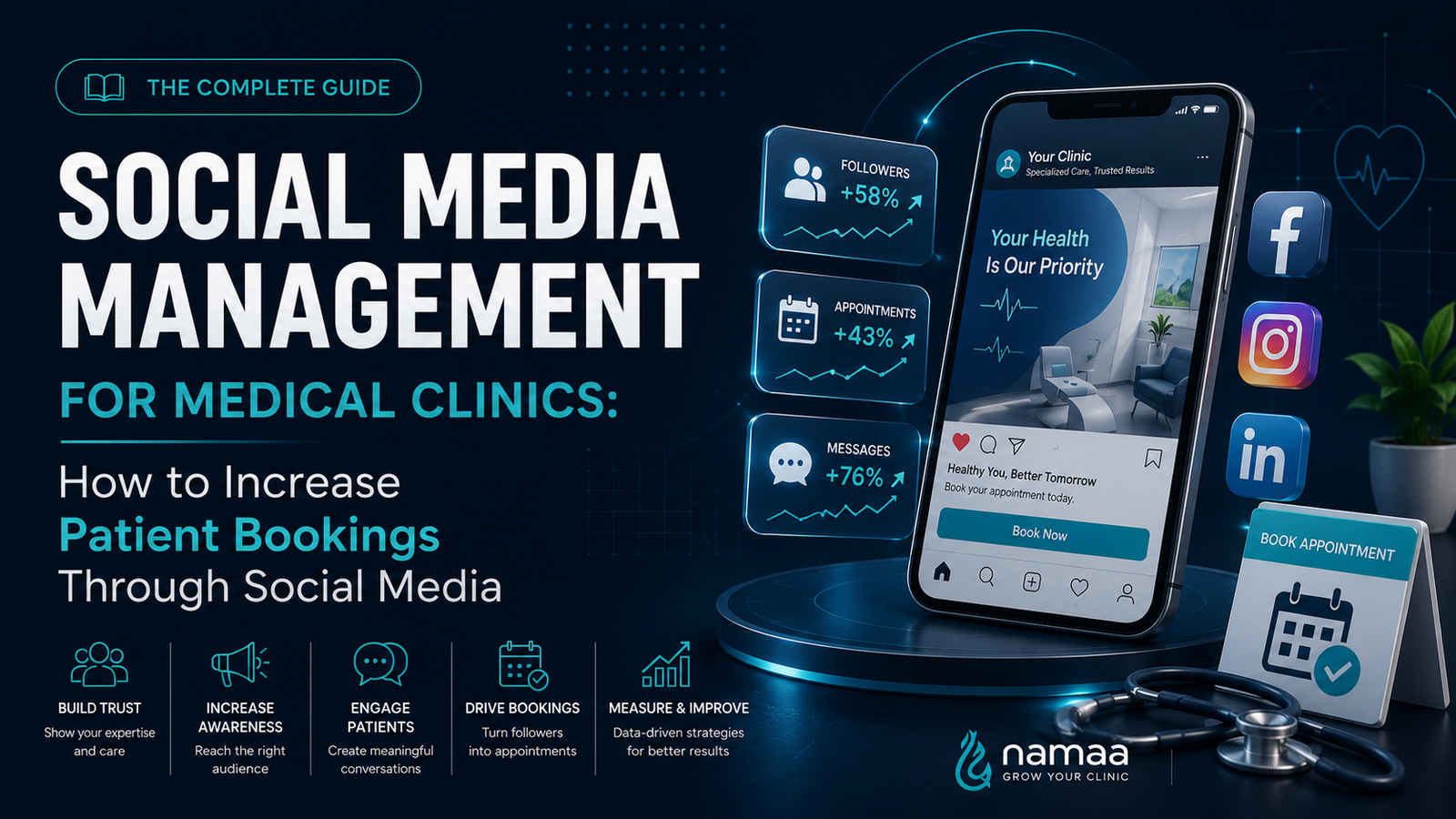
Social media management focuses on maintaining your clinic’s presence across platforms like Facebook and Instagram.
Typical responsibilities include:
- Creating content
- Designing posts
- Publishing content
- Responding to comments and messages
- Managing community engagement
- Running social media campaigns
The primary goal is to increase visibility and maintain an active online presence.
While these activities are important, they don’t necessarily guarantee business growth.
What Is a Growth Strategy?
A growth strategy is a comprehensive business plan designed to help your clinic achieve sustainable growth.
It aligns marketing, branding, operations, and business development around measurable objectives such as:
- Increasing appointment bookings
- Improving conversion rates
- Growing revenue
- Strengthening patient retention
- Expanding market share
Rather than focusing on individual marketing activities, a growth strategy optimizes the entire patient journey.
The Difference in Objectives
Social media management asks:
“What should we post this week?”
A growth strategy asks:
“How can we increase patient bookings, improve profitability, and grow the clinic?”
One focuses on content execution.
The other focuses on business outcomes.
Social Media Is One Marketing Channel
Patients don’t choose a clinic based solely on its Instagram or Facebook page.
Their decision is influenced by several factors, including:
- Website quality
- Google search results
- Online reviews
- Brand reputation
- Patient experience
- Response time
- Appointment process
A growth strategy connects all of these touchpoints into one seamless patient journey.
A Growth Strategy Starts with Data
Managing social media often focuses on publishing content consistently.
A growth strategy begins with analyzing:
- Current business performance
- Patient acquisition channels
- Conversion rates
- Market competition
- Business objectives
- Growth opportunities
Every marketing decision is based on data rather than assumptions.
Measuring Success
Social media managers often track metrics such as:
- Followers
- Reach
- Likes
- Comments
- Engagement
While these metrics provide useful insights, they don’t necessarily reflect business success.
A growth strategy measures KPIs that directly impact the clinic, including:
- Qualified inquiries
- Appointment bookings
- Conversion rate
- Patient acquisition cost
- Patient retention
- Return on Investment (ROI)
These metrics determine whether the business is actually growing.
A Growth Strategy Goes Beyond Marketing
Successful clinic growth depends on more than attracting patients.
It also involves improving:
- Patient experience
- Reception performance
- Appointment management
- Operational efficiency
- Brand positioning
- Service quality
Marketing brings patients in—but operations determine whether they stay and return.
Long-Term vs. Short-Term Thinking
Social media management often focuses on short-term activities like weekly content calendars and monthly campaigns.
A growth strategy focuses on long-term objectives by building systems that continue delivering results over time.
These include:
- Strong branding
- SEO
- Content marketing
- Website optimization
- Business development
- Performance analysis
This creates sustainable growth instead of temporary spikes in engagement.
Do Clinics Need Both?
Absolutely.
Social media management is an essential part of a clinic’s marketing efforts.
However, it delivers its greatest value when it’s guided by a broader growth strategy.
Without strategy, social media becomes a collection of posts.
With strategy, every piece of content supports a larger business objective.
How Namaa Helps Clinics Grow
At Namaa, we don’t see social media management as the final goal.
We use it as one tool within a complete growth strategy designed specifically for clinics and medical centers.
Our approach combines branding, business development, SEO, content creation, paid advertising, website development, performance analysis, and patient journey optimization to help clinics achieve measurable, sustainable growth.
Because real success isn’t measured by how often you post—it’s measured by how much your clinic grows.
Conclusion
Managing social media is important, but it should never be mistaken for a complete growth strategy.
A clinic may publish excellent content every day and still struggle to increase appointments if the rest of the business isn’t optimized.
The clinics that achieve sustainable success are those that look beyond social media and invest in a comprehensive growth strategy that aligns marketing, operations, and business development around measurable business goals.
In the end, social media helps people discover your clinic—but a growth strategy is what turns that attention into long-term success.