Choosing the right keywords is one of the most important factors in the success of your clinic’s digital marketing strategy. No matter how professional your website looks or how experienced your healthcare providers are, patients won’t find your clinic if your content isn’t aligned with the terms they actually use when searching online.
Many clinics make the mistake of optimizing their websites for technical medical terminology while patients search using simple, everyday language. A doctor may refer to a condition by its clinical name, but patients often search based on symptoms, concerns, treatments, or nearby locations.
The goal of keyword research isn’t simply to attract more website traffic. It’s about attracting the right visitors—people actively looking for the healthcare services your clinic provides. By targeting the right keywords, you improve your search engine rankings, increase qualified website traffic, reduce your Patient Acquisition Cost (CPA), and generate more appointment bookings.
In this guide, you’ll learn how to identify the keywords your patients actually search for and how to build an SEO strategy that turns those searches into new patients.
Why Keywords Matter for Healthcare SEO
Every online search begins with a keyword.
Whether someone searches for:
- Dentist near me
- Child fever treatment
- Best dermatologist in Dubai
- Dental implants cost
- Knee pain specialist
Google uses those keywords to determine which websites appear in the search results.
If your clinic targets the same terms patients are using, your website has a much greater chance of appearing when those searches happen.
Better visibility leads to more website traffic, more inquiries, and ultimately more appointment bookings.
Understanding Search Intent
One of the biggest mistakes clinics make is choosing keywords based solely on search volume.
Instead, focus on search intent—the reason behind the search.
Patients usually search with one of four intentions.
Informational Searches
Patients want answers to questions.
Examples include:
- What causes migraines?
- Symptoms of vitamin D deficiency
- Is teeth whitening safe?
- How long does Invisalign treatment take?
Educational blog articles work best for these searches.
Commercial Searches
Patients are comparing healthcare providers before making a decision.
Examples include:
- Best dentist in Cairo
- Top orthopedic clinic
- Best dermatologist near me
These searches indicate high purchasing intent.
Transactional Searches
Patients are ready to book an appointment.
Examples include:
- Book dentist appointment
- Emergency dental clinic
- Pediatrician open today
- Same-day dermatologist appointment
Service pages should target these keywords.
Navigational Searches
Patients already know the clinic they want.
Examples include:
- Namaa Vision clinic
- ABC Dental Center
- Dr. Ahmed Hassan
Your website should make it easy for branded searches to find accurate information quickly.
Think Like Your Patients
Doctors often describe treatments differently than patients do.
For example, a healthcare provider may refer to:
“Rhinoplasty”
A patient may search:
- Nose surgery
- Nose reshaping
- Nose job
Likewise:
“Orthodontic treatment”
may be searched as:
- Braces
- Clear aligners
- Invisalign
Always optimize for the language patients naturally use.
Start with Your Core Services
Begin keyword research by listing every service your clinic offers.
For example, a dental clinic may include:
- Dental implants
- Teeth whitening
- Root canal treatment
- Dental crowns
- Orthodontics
- Invisalign
- Pediatric dentistry
Each service becomes the foundation for multiple keyword opportunities.
Expand into Patient Questions
Patients rarely search using only treatment names.
They ask questions like:
- Is dental implant surgery painful?
- How much do veneers cost?
- Can braces fix crowded teeth?
- How long does teeth whitening last?
Answering these questions through blog articles improves SEO while building trust.
Include Symptom-Based Keywords
Many patients don’t know exactly what treatment they need.
Instead, they search using symptoms.
Examples include:
- Tooth pain
- Back pain
- Hair loss
- Knee swelling
- Skin rash
- Chronic headaches
Educational content targeting symptoms helps attract patients early in their decision-making process.
Use Local Keywords
Healthcare is highly location-based.
Patients frequently include geographic terms in their searches.
Examples include:
- Dentist in Dubai Marina
- Orthopedic clinic in Riyadh
- Best dermatologist in Cairo
- Family doctor near me
Include local keywords naturally throughout your:
- Homepage
- Service pages
- Blog articles
- Meta titles
- Meta descriptions
Local SEO significantly improves visibility within your community.
Focus on Long-Tail Keywords
Long-tail keywords contain three or more words and typically have lower competition.
Examples include:
- Best pediatric dentist near me
- Affordable dental implants in Dubai
- Knee replacement surgeon in Abu Dhabi
- Teeth whitening before wedding
Although they receive fewer searches individually, they often convert better because they reflect specific patient intent.
Analyze Google’s Search Suggestions
Google itself provides valuable keyword ideas.
Simply begin typing a healthcare topic into Google and observe:
- Autocomplete suggestions
- Related searches
- People Also Ask questions
These suggestions come directly from real user behavior and often reveal valuable opportunities for content creation.
Study Your Competitors
Analyze clinics that consistently rank on the first page of Google.
Review:
- Service pages
- Blog topics
- Page titles
- Meta descriptions
- Frequently Asked Questions
Competitor analysis helps identify keyword opportunities while revealing content gaps your clinic can fill.
Use Professional Keyword Research Tools
Several SEO tools help identify valuable keywords.
Popular options include:
- Google Keyword Planner
- Ahrefs
- SEMrush
- Moz Keyword Explorer
- Ubersuggest
- Google Search Console
These platforms provide information about:
- Search volume
- Keyword difficulty
- Competition
- Related keywords
- Seasonal trends
Use this data to prioritize opportunities with strong business potential.
Match Keywords to Individual Pages
Avoid targeting multiple unrelated keywords on the same page.
Each page should focus on one primary keyword supported by several related phrases.
For example:
Primary Keyword
Dental Implants
Supporting Keywords
- Tooth implants
- Permanent tooth replacement
- Dental implant surgery
- Implant dentist
- Missing teeth treatment
This structure helps search engines better understand your content.
Optimize Your Website Naturally
Keywords should appear naturally throughout your content.
Include them in:
- Page titles
- Meta descriptions
- Headings
- Opening paragraphs
- Image alt text
- URLs
- Internal links
Avoid repeating keywords excessively.
Google rewards helpful, natural content—not keyword stuffing.
Build Content Around Keyword Clusters
Rather than publishing isolated articles, create groups of related content.
For example:
Main Service:
Dental Implants
Supporting Articles:
- Dental Implant Recovery Timeline
- Dental Implant Cost Guide
- Who Is a Good Candidate for Dental Implants?
- Dental Implants vs. Bridges
- Common Myths About Dental Implants
This topic cluster strengthens your authority in Google’s eyes.
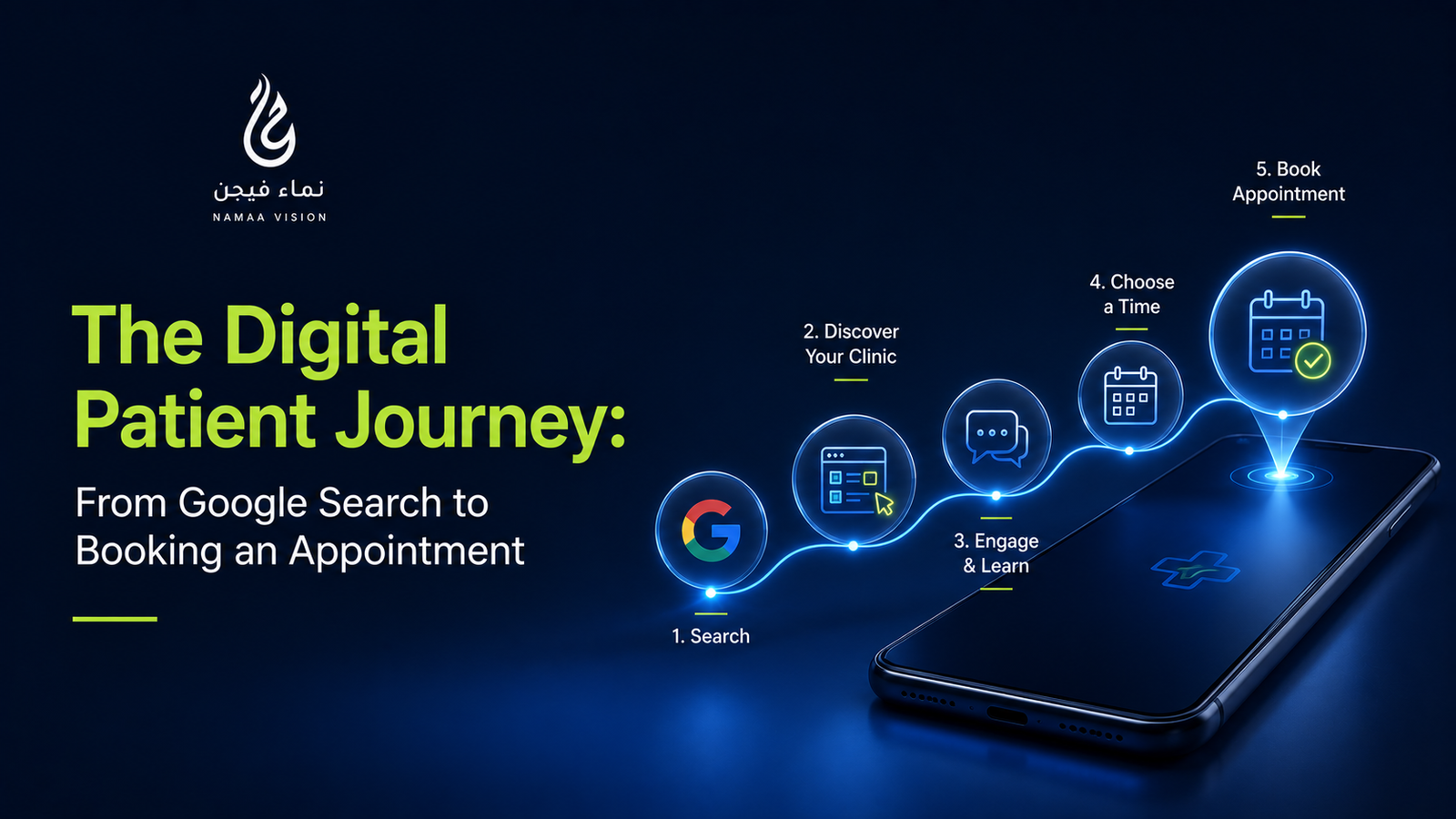
Consider the Patient Journey
Different keywords correspond to different stages of the decision-making process.
Early Stage:
- Why does my knee hurt?
- Causes of hair loss
Middle Stage:
- Best treatment for knee pain
- Hair transplant options
Final Stage:
- Orthopedic clinic near me
- Hair transplant clinic in Dubai
A complete SEO strategy targets every stage of the patient journey.
Monitor Keyword Performance
SEO requires continuous optimization.
Track:
- Keyword rankings
- Organic traffic
- Click-through rate (CTR)
- Website conversions
- Appointment bookings
- Bounce rate
- Time on page
These metrics reveal which keywords generate real business results.
Common Keyword Research Mistakes
Many clinics struggle because they focus on the wrong keywords.
Common mistakes include:
- Using only medical terminology
- Ignoring search intent
- Targeting highly competitive keywords only
- Forgetting local keywords
- Publishing duplicate content
- Keyword stuffing
- Neglecting symptom-based searches
- Not updating old content
- Ignoring Google Search Console data
Avoiding these mistakes helps improve long-term SEO performance.
Build a Long-Term Keyword Strategy
Successful SEO is not about ranking for one keyword.
It’s about building authority across an entire healthcare specialty.
Over time, your clinic should create comprehensive content covering:
- Treatments
- Symptoms
- Conditions
- Preventive care
- Frequently asked questions
- Local healthcare topics
As your content library grows, Google begins recognizing your website as an authoritative source, leading to stronger rankings across hundreds of relevant keywords.
Final Thoughts
Choosing the right keywords is the foundation of every successful healthcare SEO strategy. By understanding how patients search, focusing on search intent, targeting local and long-tail keywords, and creating valuable content around real patient questions, your clinic can attract highly qualified visitors who are actively looking for the services you provide.
The most effective keyword strategies go beyond search volume—they prioritize relevance, patient intent, and long-term value. When every page on your website is optimized for the language your patients actually use, your clinic becomes easier to discover, more trusted by search engines, and better positioned to convert visitors into booked appointments.
At Namaa Vision, we help clinics and medical centers develop comprehensive SEO strategies based on in-depth keyword research, content marketing, Local SEO, and performance optimization. By targeting the keywords your patients are already searching for, we help your clinic achieve higher rankings, increase qualified traffic, and generate sustainable growth through organic search.