Healthcare marketing is evolving faster than ever. The strategies that helped clinics attract patients just a few years ago are no longer enough to compete in today’s digital-first landscape. Patients now expect personalized experiences, instant communication, seamless online booking, and trustworthy healthcare information across multiple digital channels.
At the same time, technologies such as Artificial Intelligence (AI), automation, voice search, predictive analytics, and advanced personalization are reshaping how clinics connect with patients. Search engines continue to evolve, social media platforms are prioritizing video content, and patient expectations are higher than ever before.
Clinics that embrace these changes will strengthen their competitive position, improve patient acquisition, and build long-term relationships. Those that ignore them risk falling behind in an increasingly crowded healthcare market.
In this guide, we’ll explore the most important digital healthcare marketing trends expected to shape clinics throughout 2026 and explain how healthcare providers can prepare for the future.
1. Artificial Intelligence Will Become a Core Marketing Tool
Artificial Intelligence is no longer a futuristic concept—it’s becoming an essential part of everyday healthcare marketing.
AI helps clinics:
- Generate marketing content
- Analyze patient behavior
- Optimize advertising campaigns
- Improve SEO strategies
- Automate patient communication
- Predict marketing performance
- Personalize patient experiences
Rather than replacing marketers, AI enables them to work more efficiently while making better data-driven decisions.
Clinics that integrate AI responsibly will gain a significant competitive advantage.
2. Hyper-Personalized Patient Experiences
Patients increasingly expect healthcare communication that reflects their individual needs.
Generic marketing campaigns are becoming less effective.
Instead, successful clinics are delivering personalized experiences through:
- Customized email campaigns
- Personalized treatment recommendations
- Appointment reminders
- Follow-up care
- Educational content based on patient interests
- Automated wellness campaigns
Personalization improves patient engagement while strengthening long-term relationships.
3. Local SEO Will Become Even More Competitive
Most healthcare decisions begin with a local Google search.
Patients continue searching for terms such as:
- Dentist near me
- Dermatologist in my area
- Pediatric clinic nearby
As competition increases, Local SEO will become even more important.
Clinics should focus on:
- Google Business Profile optimization
- Location-specific landing pages
- Local keywords
- Google Reviews
- Consistent business information
- Community-focused content
The clinics dominating local search results will continue attracting the majority of nearby patients.
4. Google Reviews Will Carry More Influence
Patient reviews already play a major role in healthcare decisions, and their importance will continue growing.
Future patients increasingly evaluate:
- Overall ratings
- Review quality
- Recent patient experiences
- Business owner responses
Clinics should actively encourage satisfied patients to leave honest reviews while responding professionally to all feedback.
Strong online reputations will directly influence both search rankings and appointment bookings.
5. Video Marketing Will Dominate Patient Engagement
Video continues to outperform nearly every other content format.
Patients prefer watching videos because they are:
- Easy to understand
- More engaging
- More personal
- Faster to consume
Successful healthcare videos include:
- Doctor introductions
- Treatment explanations
- Frequently asked questions
- Health education
- Behind-the-scenes clinic tours
- Patient testimonials (with consent)
Short-form video on platforms like Instagram Reels, TikTok, and YouTube Shorts will remain a powerful patient acquisition tool.
6. Voice Search Optimization Will Continue Growing
Smartphones and voice assistants are changing how patients search for healthcare information.
Instead of typing:
“Dermatologist Dubai”
Patients increasingly ask:
“Who is the best dermatologist near me?”
Clinics should optimize content for conversational language by:
- Answering common questions
- Writing natural content
- Expanding FAQ sections
- Targeting long-tail keywords
Voice search favors clear, informative content.
7. Content Marketing Will Become More Educational
Patients increasingly value trustworthy educational content over promotional advertising.
Clinics that consistently publish helpful resources will build stronger authority.
Popular content formats include:
- Blog articles
- Videos
- Infographics
- Podcasts
- Patient guides
- FAQ pages
- Interactive educational content
Education builds trust before patients schedule their first appointment.
8. First-Party Data Will Become More Valuable
As privacy regulations continue to evolve and third-party cookies become less reliable, clinics will place greater emphasis on collecting first-party data.
This includes information patients voluntarily provide through:
- Appointment forms
- Newsletter subscriptions
- Website inquiries
- CRM systems
- Patient portals
First-party data enables more personalized marketing while respecting privacy regulations.
9. Marketing Automation Will Expand
Marketing automation helps clinics maintain consistent communication without increasing staff workload.
Automation will increasingly support:
- Appointment reminders
- Follow-up campaigns
- Review requests
- Preventive care reminders
- Email newsletters
- Patient education
Automation improves efficiency while strengthening patient relationships.
10. Patient Experience Will Become a Ranking Factor
Search engines increasingly prioritize websites that provide excellent user experiences.
Important factors include:
- Website speed
- Mobile responsiveness
- Easy navigation
- Online booking
- Helpful content
- Accessibility
A positive digital experience improves both SEO performance and conversion rates.
11. Conversion Rate Optimization (CRO) Will Receive More Attention
Generating traffic is only valuable if visitors become patients.
Clinics will increasingly invest in Conversion Rate Optimization by improving:
- Landing pages
- Calls-to-action
- Booking forms
- Website speed
- Mobile usability
- Trust signals
Even small improvements in conversion rates can dramatically increase appointment bookings.
12. CRM Systems Will Drive Smarter Marketing
Customer Relationship Management (CRM) platforms are becoming central to healthcare marketing.
Modern CRM systems help clinics:
- Track patient interactions
- Automate communication
- Segment audiences
- Monitor patient journeys
- Improve retention
Data-driven relationship management creates better long-term patient experiences.
13. Reputation Management Will Become a Continuous Process
Managing online reputation is no longer an occasional marketing task.
Successful clinics continuously monitor:
- Google Reviews
- Social media mentions
- Patient feedback
- Brand sentiment
- Online discussions
Fast, professional responses strengthen patient confidence.
14. Healthcare Websites Will Become Smarter
Clinic websites are evolving from digital brochures into interactive patient engagement platforms.
Modern healthcare websites increasingly include:
- AI-powered chatbots
- Online appointment booking
- Personalized recommendations
- Interactive FAQs
- Live chat
- Educational resources
The easier it is for patients to find answers and schedule appointments, the higher the conversion rate.
15. Data-Driven Decision Making Will Define Marketing Success
Marketing decisions based on assumptions are becoming obsolete.
Successful clinics rely on analytics to evaluate:
- Website traffic
- Appointment bookings
- Cost Per Acquisition (CPA)
- Return on Investment (ROI)
- Patient Lifetime Value (LTV)
- Conversion rates
- SEO performance
Regular reporting enables continuous improvement.
16. Omnichannel Marketing Will Become the Standard
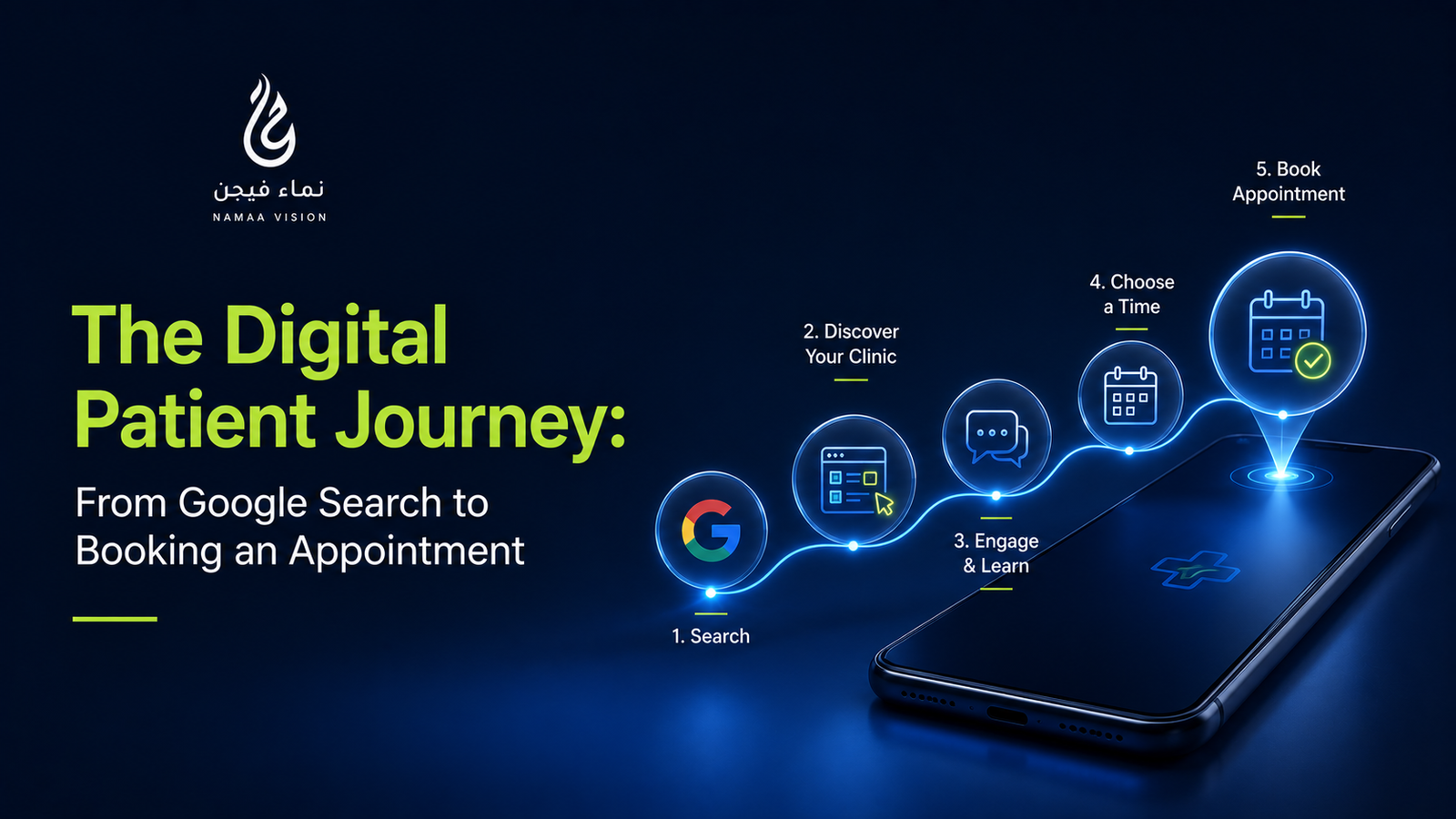
Patients interact with clinics across multiple platforms before booking an appointment.
A typical patient journey may include:
- Google Search
- Google Reviews
- Website
- YouTube
Clinics must provide a consistent experience across every touchpoint.
Integrated marketing builds familiarity and trust.
17. Trust Will Remain the Ultimate Competitive Advantage
Despite rapid technological advances, one factor will continue to matter more than anything else—trust.
Patients choose clinics that consistently demonstrate:
- Medical expertise
- Transparency
- Compassion
- Professionalism
- Authentic communication
- Positive patient experiences
Technology can improve efficiency, but trust remains the foundation of every successful healthcare brand.
How Clinics Can Prepare for 2026
Preparing for the future doesn’t require adopting every new technology immediately.
Instead, clinics should focus on building a strong digital foundation by:
- Investing in SEO and Local SEO
- Creating educational content
- Optimizing Google Business Profile
- Using AI strategically
- Implementing marketing automation
- Improving website performance
- Strengthening patient retention
- Monitoring analytics
- Building a recognizable healthcare brand
Clinics that embrace continuous improvement will remain competitive regardless of future changes.
Common Mistakes to Avoid
As digital healthcare marketing evolves, many clinics still make avoidable mistakes that limit growth.
Common examples include:
- Relying solely on paid advertising
- Ignoring Local SEO
- Neglecting patient retention
- Publishing inconsistent content
- Failing to measure marketing performance
- Underestimating online reputation
- Delaying AI adoption
- Ignoring website user experience
- Inconsistent branding
- Focusing on technology instead of patient needs
Avoiding these mistakes helps clinics adapt more successfully to future trends.
Building a Future-Ready Healthcare Brand
The clinics that thrive in 2026 won’t simply adopt the latest marketing tools—they’ll build integrated digital ecosystems centered around patient experience.
Success will come from combining:
- Artificial Intelligence
- SEO
- Content marketing
- Local SEO
- Reputation management
- CRM systems
- Marketing automation
- Data analytics
- Personalized communication
When these strategies work together, clinics create a scalable marketing system that attracts, converts, and retains patients more effectively.
Final Thoughts
Digital healthcare marketing will continue evolving rapidly throughout 2026, driven by Artificial Intelligence, personalization, automation, Local SEO, video marketing, and data-driven decision-making. While technology is transforming how clinics connect with patients, the fundamentals remain unchanged: trust, exceptional patient experiences, and valuable healthcare education will always be at the heart of successful marketing.
Clinics that embrace innovation while maintaining a patient-first approach will be best positioned to attract qualified patients, improve retention, and build sustainable growth. The future belongs to healthcare providers that combine advanced technology with authentic communication and strategic marketing.
At Namaa Vision, we help clinics and medical centers stay ahead of the latest digital marketing trends through AI-powered strategies, SEO, content marketing, Local SEO, reputation management, conversion optimization, and performance analytics. By preparing your clinic for the future today, you can build a stronger brand, attract more patients, and achieve long-term success in an increasingly competitive healthcare landscape.